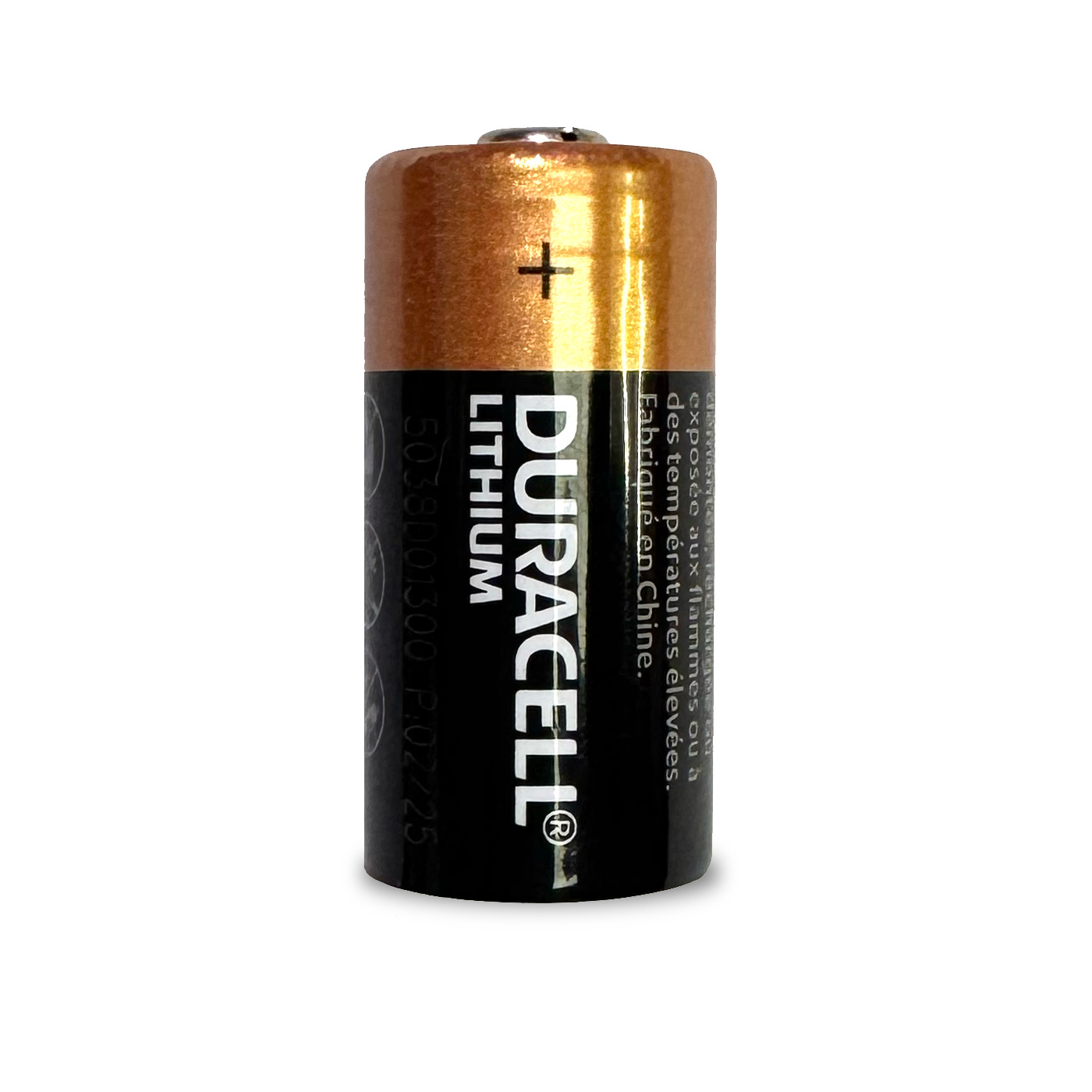
Replacement CR123A Batteries
£12.49 (exc. VAT) + shipping


Product information
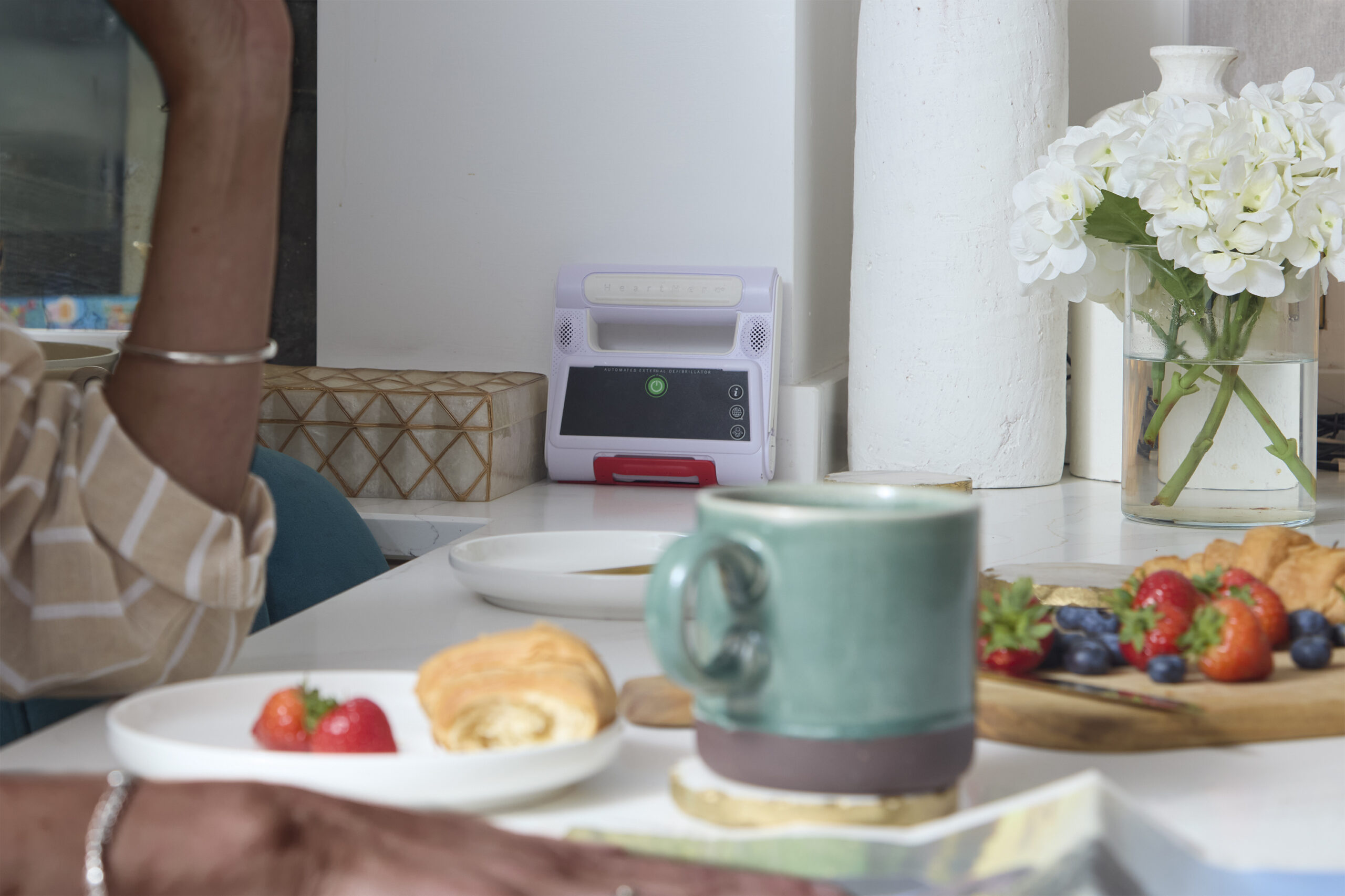
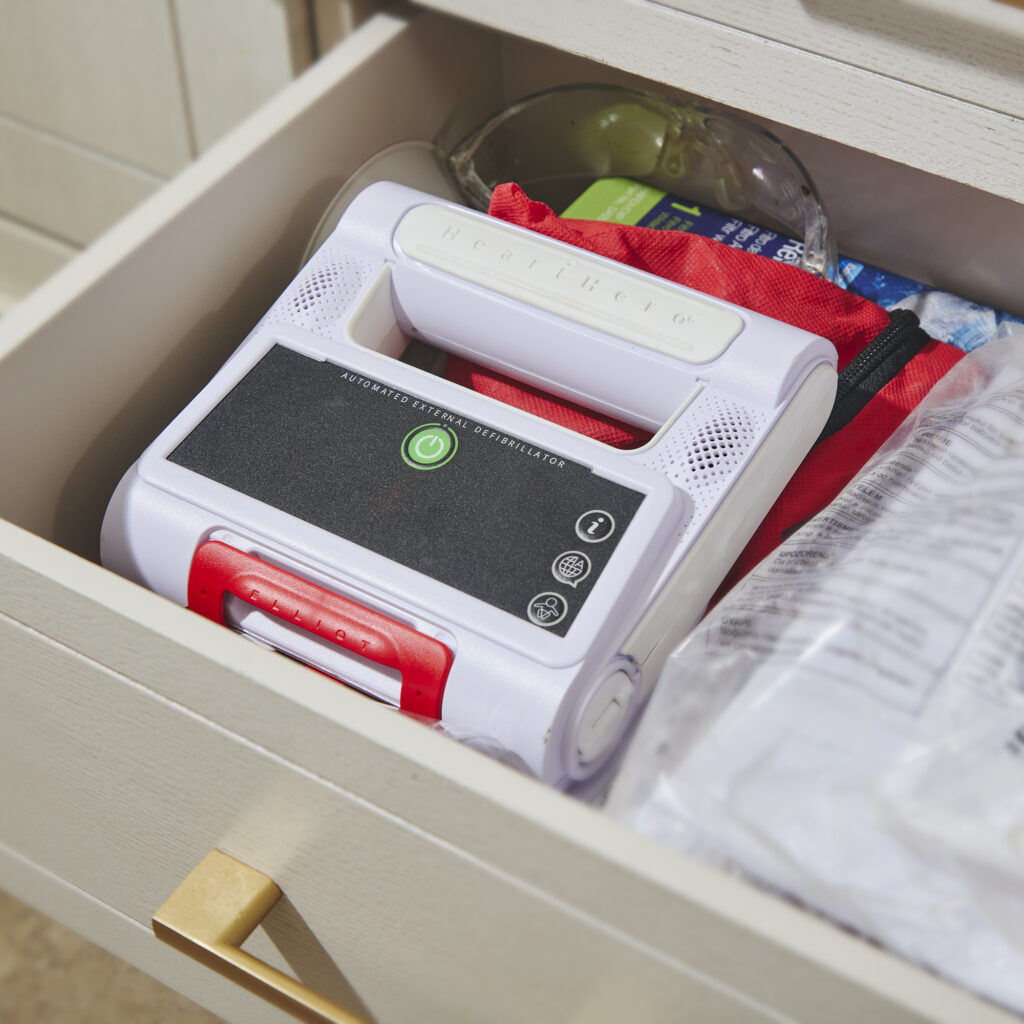
HeartHero gives you the peace of mind that comes with being prepared to help a loved one in an emergency. It is an advanced AED designed to be used by everyone.

Product description
Replacement CR123A Batteries
Specifications
Delivery & returns
Visit our Product page to place your HeartHero purchase. Once an order is processed, standard delivery typically takes 3-5 working days, depending on your location. Once your order is dispatched, you’ll receive a confirmation email with tracking details.
If you’re not completely satisfied, you can return your defibrillator within 14 days of delivery for a full refund. Read our full Consumer Terms and Conditions.
Giving you confidence in a crisis
HeartHero is designed for simplicity. Engineered for real-world emergencies, our defibrillator is reliable, durable, and reassuringly easy to use.
Lightweight
HeartHero weighs significantly less than traditional defibrillators. That means anyone can deploy it quickly and easily, regardless of their strength or experience.
Portable
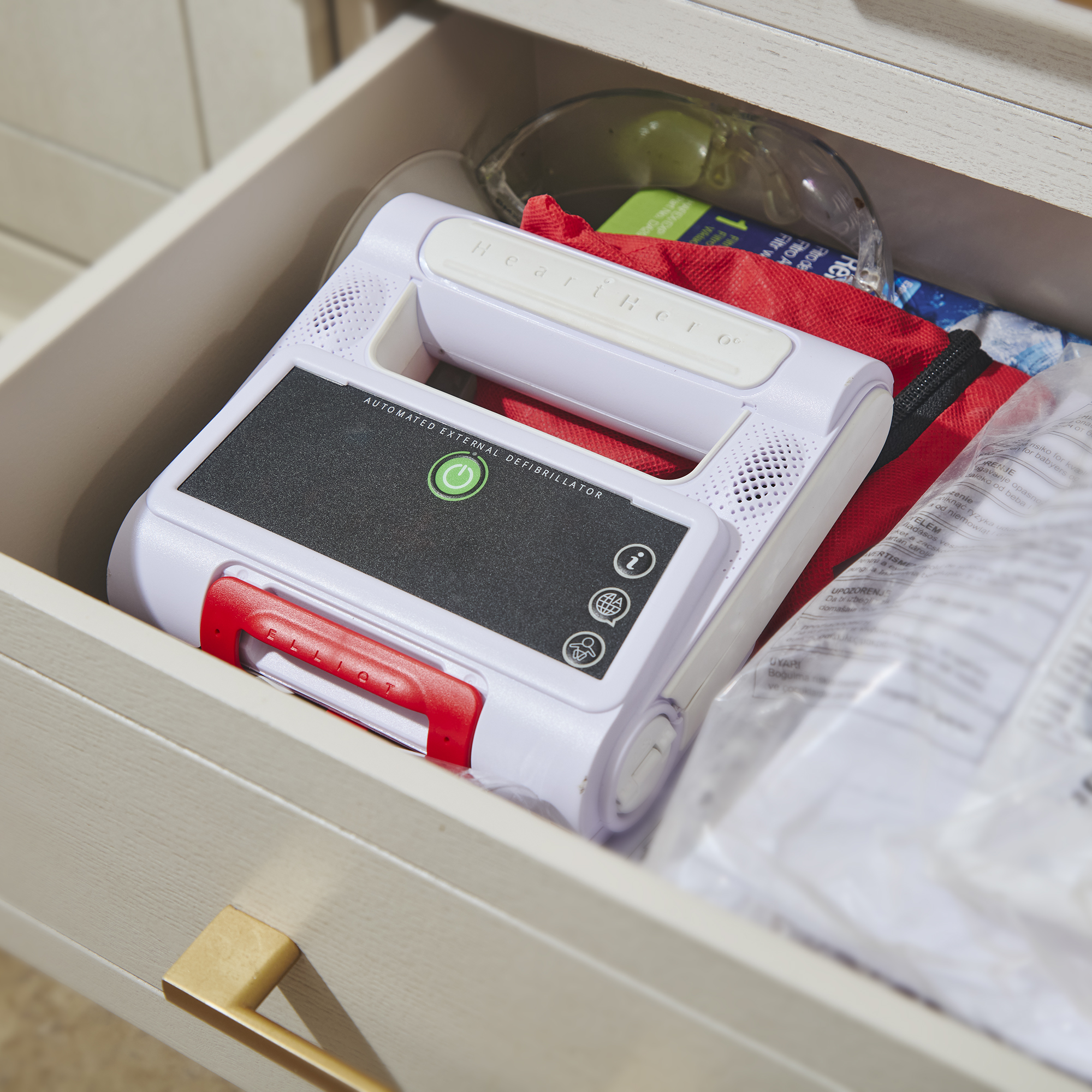
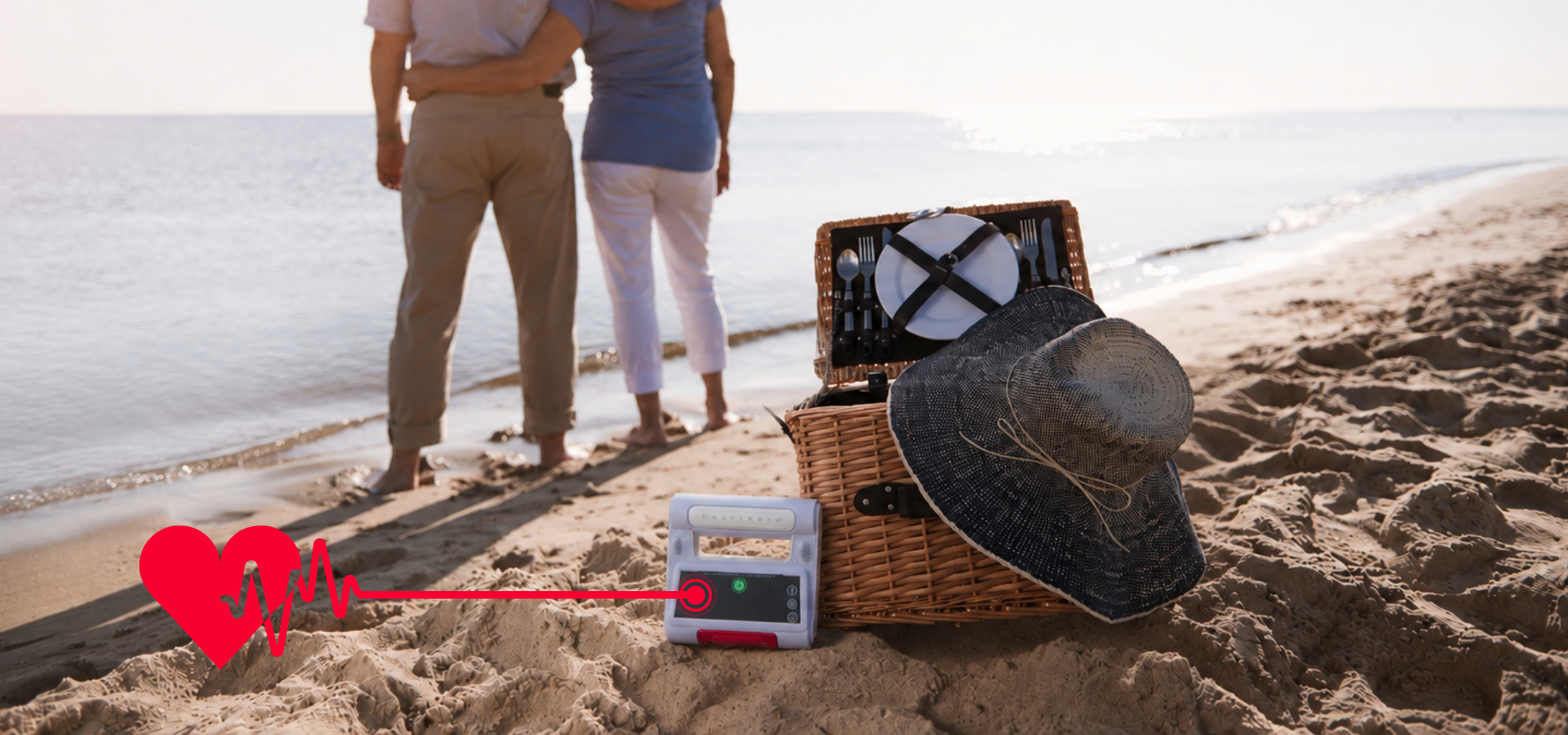
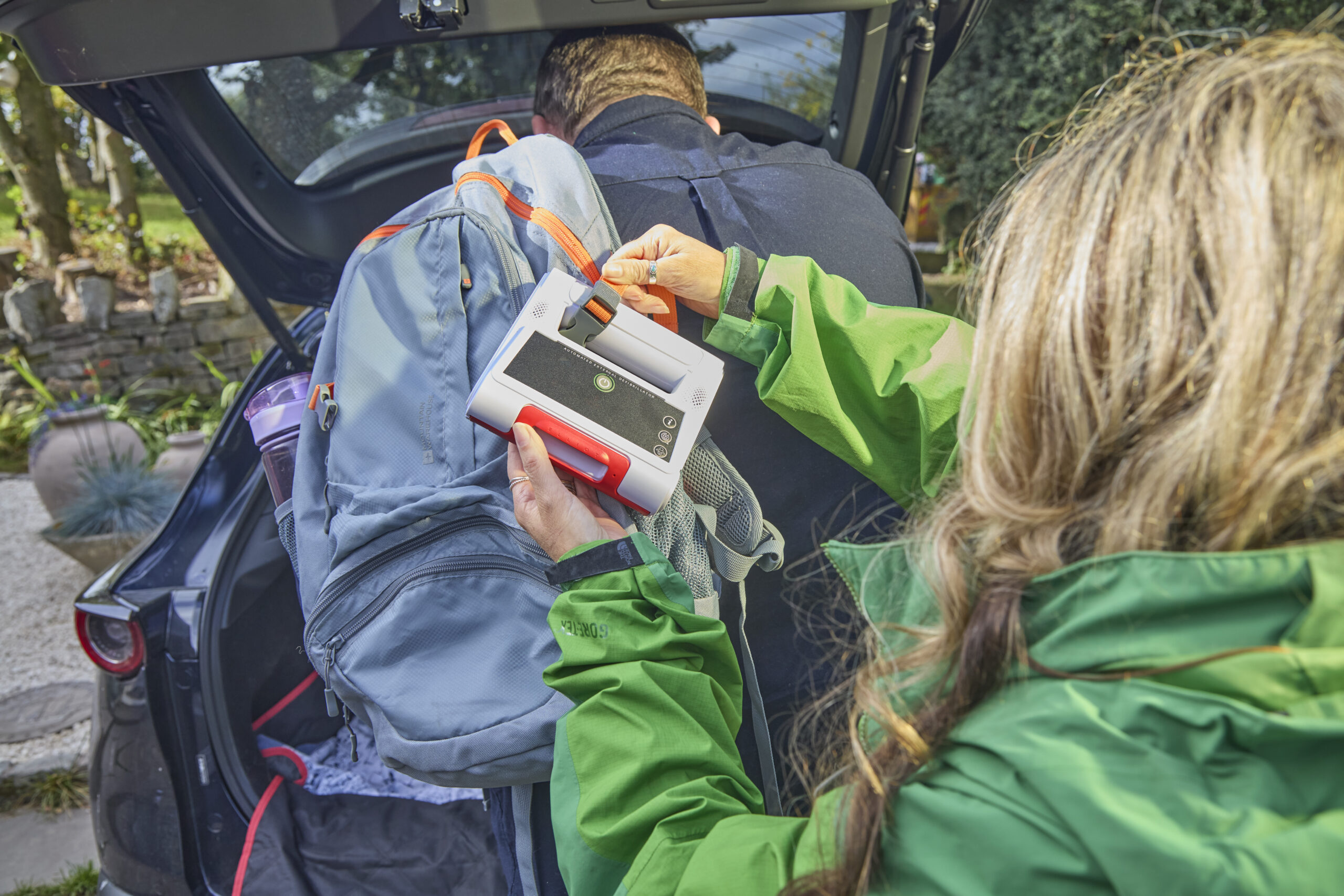
Compact and travel-ready, HeartHero fits easily into bags or glove compartments. That means you’re always prepared, wherever you go.
Waterproof
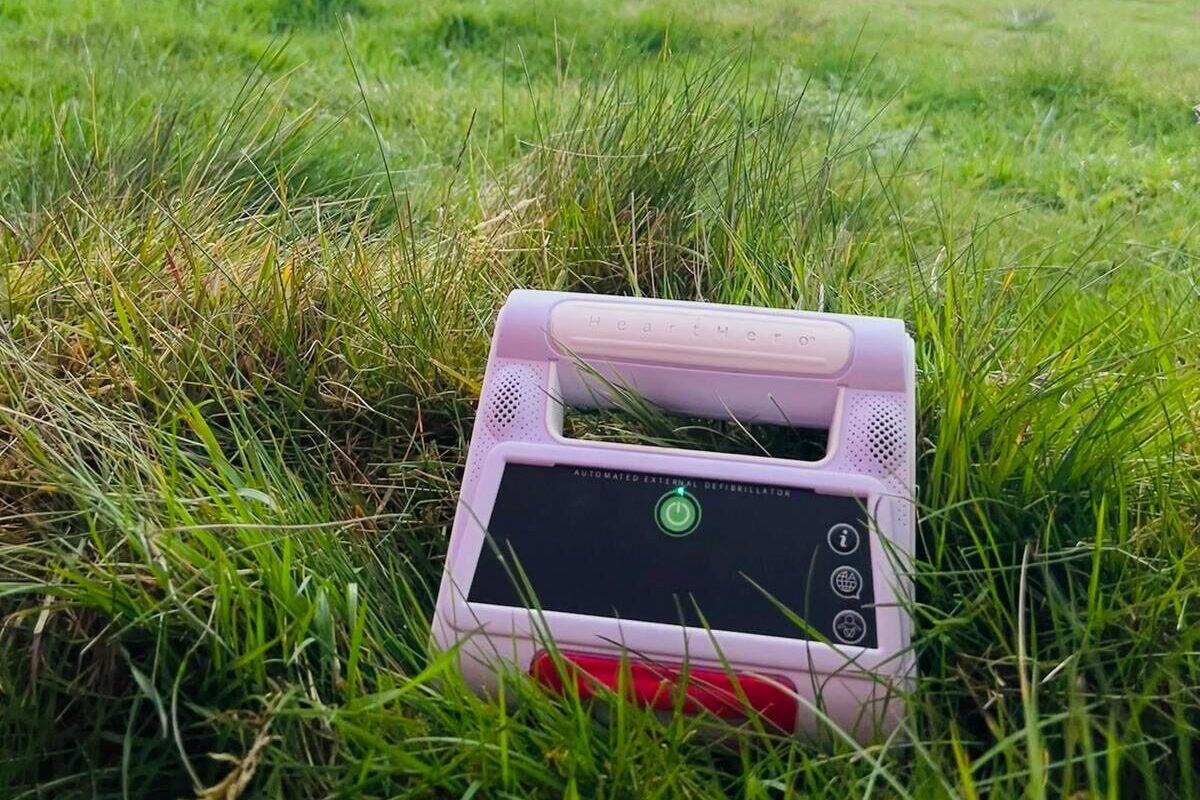
If you’re caught in the rain or near water, you can depend on HeartHero’s waterproof design. This defibrillator operates reliably in wet conditions.
Works in extreme temperatures
HeartHero performs in temperatures ranging from -20°C to 50°C. Its resistance to extreme heat or cold makes it ideal for travel and outdoor use.
Requires standard batteries
No special chargers or expensive batteries are needed. HeartHero uses four standard CR123A batteries, making replacements fast and accessible from many shops and supermarkets in the UK and overseas.
Six-year warranty
HeartHero comes with a six-year warranty. You can rely on our defibrillator to be a key part of your safety plan, with dedicated customer support whenever you need it.


Full support
HeartHero provides easy voice instructions and access to a dedicated app with training videos and classes.
Six-year warranty
Our at-home AED comes with a six-year warranty, giving you peace of mind and a durable device engineered for longevity.

Priced for accessibility
Unlike the majority of AEDs, HeartHero doesn’t use an expensive proprietary battery, operating with standard, store-bought CR123A batteries.
Empowering anyone, anywhere to save a life.
We are driven to help deliver critical interventions when and where they are most needed. HeartHero is designed to provide continued reassurance at home or away. With reliability, simple functionality and voice guidance, we are making a difference in emergencies.
Frequently Asked
Questions
Sudden cardiac arrest is triggered by an electrical malfunction in the heart that causes an irregular heartbeat (arrhythmia). It occurs suddenly and typically without warning. The heart’s pumping action is interrupted and it can’t effectively pump blood to the body’s organs. Shortly after, a person loses consciousness and will have no pulse. If an individual who has suffered cardiac arrest doesn’t receive treatment, death may occur within minutes.
Sudden cardiac arrest is not the same as a heart attack. A heart attack refers to a blockage of blood flow to the heart, whereas sudden cardiac arrest is when the heart stops beating suddenly due to an electrical malfunction.
No, people of all ages can have a sudden cardiac arrest. The most common cause is ventricular fibrillation, an irregular heart rhythm.
No, anyone can be affected by sudden cardiac arrest. Worldwide, sudden cardiac arrest is responsible for the deaths of more than 7 million people a year as cited by medscape.
Defibrillators can be found in public places, but the vast majority (80%) of sudden cardiac arrests happen at home. Every second matters when it comes to a life-saving intervention, and HeartHero allows critical care to be delivered before an ambulance arrives.
An automated external defibrillator (AED) such as HeartHero is used when someone is unresponsive and not breathing normally, or not breathing at all. An AED only shocks the heart if needed, so it is better to apply the pads when in doubt.
Using an AED to deliver an electrical shock is the sole way to treat sudden cardia arrest. Cardiopulmonary resuscitation (CPR) can keep oxygen being supplied to the brain, but is incapable of restoring the heart’s rhythm.
HeartHero is designed to be easy to use. It provides visual and audio prompts to guide users through the process. After the green power button is pushed, the red tab is pulled to turn on the device and release the pads. When the sticky pads are applied to the chest, HeartHero reads the person’s heart rhythm to determine if a shock is needed, before warning the user to stand back and delivering the shock. HeartHero will not shock a person if their heart does not need shocking, making it safe to use if in doubt whether a person is in sudden cardiac arrest.
Yes. HeartHero records detailed event data during a rescue, providing a comprehensive record of the AED’s operation and the patient’s heart rhythm throughout the event.
Following a rescue, authorised users can securely access the event data via the HeartHero app. Depending on the rescue, the report may include:
Continuous ECG/event recording.
Heart rhythm analysis performed by the AED.
Whether a shock was advised.
The number of shocks delivered, including shock energy and timing.
CPR prompts and key treatment events.
Treatment date, time and GPS location.
Device identification and treatment summary.
This information can be used for post-event review, incident documentation and operational debriefing. It provides healthcare professionals and organisations with a detailed record of the AED’s actions during the rescue.
Please note: The recorded data is intended for case review and professional consideration. It should not be used as the sole basis for diagnosis, treatment decisions or patient care.
Through the Heart Hero App. The signal is sent immediately via Bluetooth if the device is connected or downloaded at the next connection.
All four batteries need to be fully functioning for the device to work.
The device uses 4x CR123A Batteries, and comes with batteries and a set of pads at first purchase.
Yes. It is portable and can be used at both work and at home. The pads are one time use and more information is here on how to replace them.
No. HeartHero is a reusable AED. After a rescue, the pad cartridge must be replaced before the AED can be returned to service. Replacing the batteries is also recommended to ensure the AED is fully prepared for its next use.
The pre-connected cartridge contains the electrode pads, which are designed for single-patient use and must be replaced after every rescue with a new cartridge.
After using the AED, you should:
Replace the used pad cartridge with a new pre-connected cartridge.
Replace the batteries (recommended).
Download the event data if required.
Allow the AED to complete its automatic self-test before returning it to service.
The advantage of the pre-connected cartridge is that the replacement pads are already fitted in the correct orientation and ready to use, helping to reduce delays and minimise the risk of errors during the next emergency. HeartHero is designed to be used again and again. Simply replace the pad cartridge and, as recommended, the batteries, and the AED will be ready for its next emergency.
The HeartHero defibrillator has a paediatric button and single dual pads for adult and paediatric use – more information is available HERE.
No special chargers or expensive batteries are needed. HeartHero uses four standard CR123A batteries, making replacements fast and accessible from many shops and supermarkets in the UK and overseas.
The shipping charge to a UK address is £12.99 +VAT.
You should make a daily visual check to ensure the light is flashing green. A monthly full check is recommended to keep in mind the expiry of the pads.
If the Heart Hero AED is connected to the app, it will inform you if the self-check finds a fault.
The AED currently has two languages – English and Spanish. Other language options will be available via the app in the future.
No, HeartHero is lightweight and ultra-portable, fitting easily in your bag or vehicle glovebox. It is a life-saving device that you can take anywhere.
Yes; not only is HeartHero water resistant – being able to withstand exposure to moisture such as a spillage or leaking water bottle in your bag – but it is also dustproof and can operate in extreme temperatures.
HeartHero uses one set of pads for both adult and child use. Not only does this avoid any potential mix-ups during usage, but it also helps to keep the device affordable and accessible.
With the iPhone app connected, you can now receive wireless software updates, a first for the AED industry, without having to send your device back to our maintenance team. For more detail, read our
blog post here: https://mydefib.co.uk/resources/update-hearthero-with-bluetooth
For Android users, the app has not yet been released, so please follow customer serviceinstructions for updates to your HeartHero AED.
The price of HeartHero in the UK is £599.00 (excl. VAT) + shipping (Launch offer). Navigate to our Product section to order HeartHero now.
HeartHero, with pads and batteries included, weighs 0.590 kg. Its dimensions are 16 cm x 15.5 cm x 4.3 cm, and it has an integrated ergonomic handle.
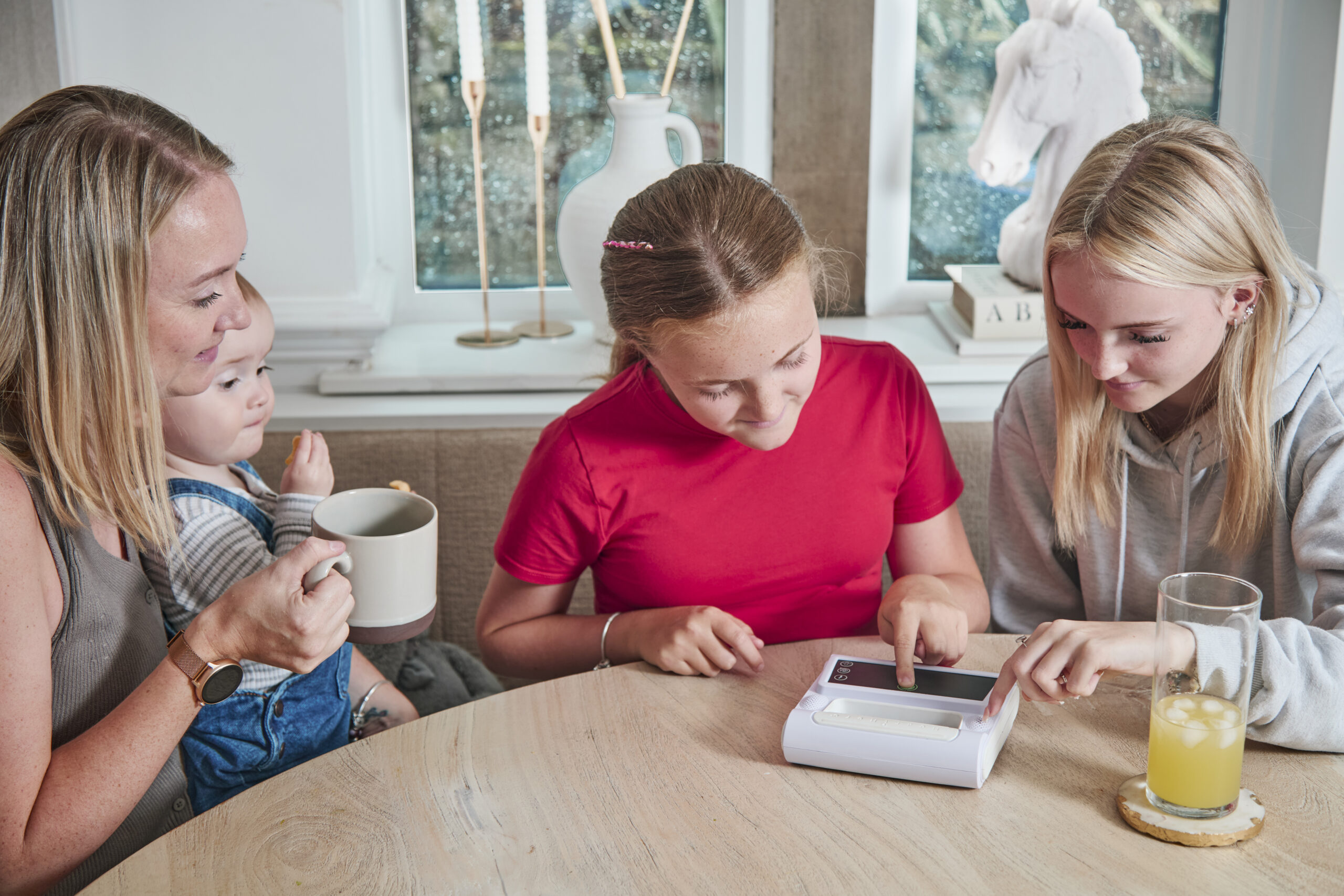
You do not need formal training to use HeartHero. The controls are easy and intuitive, with clear visual and voice instructions.
Yes. HeartHero has the UKCA Mark and CE Mark, making it available in the UK and 32 other countries.
A lifesaver at your side: How HeartHero makes the difference.
Read stories from HeartHero owners who made an at-home AED central to their safety plan.
-
A tale of two heroes, big and small – Dave and Ezra’s story
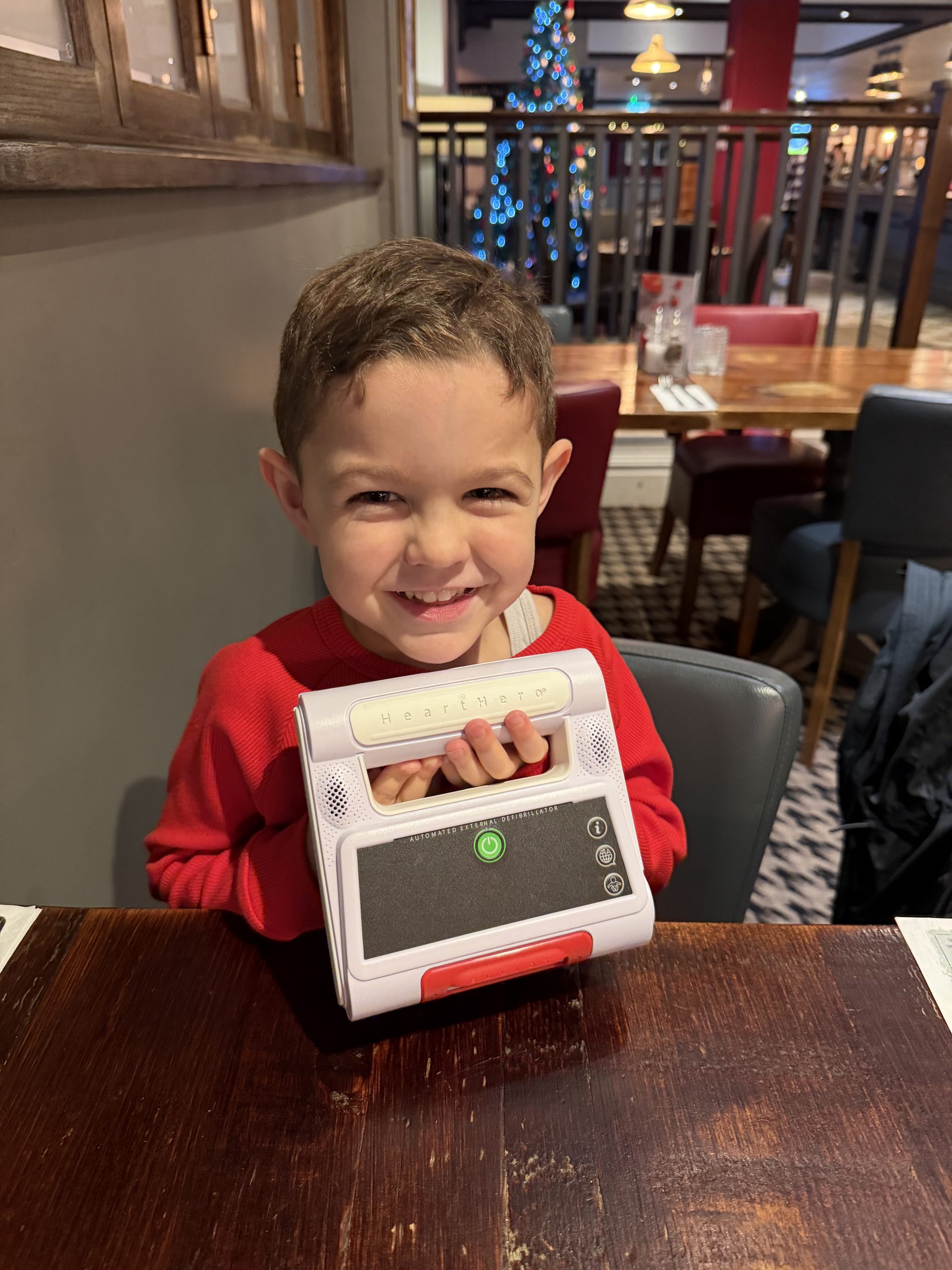
When five-year-old Ezra packs his school bag, his compact HeartHero AED is never left behind. Born with Long QT Type 1, Ezra now carries his own life-saving defibrillator. In memory of his stepdaughter Isla, Dave Hutton and Ezra are on a mission to gift these lightweight devices to families nationwide delivering safety and peace of…

-
Defibrillator myths debunked: Time for some fact-finding!
Some 80% of cardiac arrests happen at home. This blog article was written to debunk the most common defibrillator myths for those with a defib in their house or apartment, as well as users relying on the device outdoors and on holiday. You’ll read accurate information on what an AED is and how they are…

-
Heatwaves and heart health: Staying prepared during hot weather
The UK is changing. Long, hot summers are becoming more common, and periods of extreme heat are no longer unusual. Most of us think about sunscreen, staying hydrated and keeping cool.

-
How to support heart health during the winter
According to the British Heart Foundation, heart attacks are more common during the coldest season¹. During this time of year, vasoconstriction happens. This is when your muscles tighten the blood vessels, shrinking the space inside, reducing blood flow to the skin, and helping to keep you warm². It’s a double-edged sword. Vasoconstriction helps your body…

-
How to Update Your HeartHero
Easily update your HeartHero AED with Bluetooth technology, keeping your device up to date with the latest firmware.

-
How to use an AED defibrillator
When responding to an emergency, many people worry that they might do the wrong thing.

-
JumpStart’s Jon McLeod: The Interview
JumpStart is a new campaign calling for defibrillators to be fitted in every new car sold in the UK. We chat to campaign director for JumpStart, Jon McLeod about the campaign’s work to lobby the government.

-
Portable AEDs and hospital defibrillators: What’s the difference?
An AED – or automated external defibrillator, to use its full name – is a portable device that is designed to treat cardiac arrest.
-
What is an AED defibrillator?
An AED – or automated external defibrillator, to use its full name – is a portable device that is designed to treat cardiac arrest.
-
World Cup 2026: The healthy heart of football
As the excitement from the 2026 FIFA World Cup is at the forefront of everyone’s minds, a recent incident involving Denmark midfielder Christian Eriksen serves as a timely reminder of the importance of being prepared for a cardiac emergency.