How to Use an AED Defibrillator
When responding to an emergency, many people worry that they might do the wrong thing.
A real-life emergency doesn’t need to mean panic. AED defibrillators allow us to act during a cardiac arrest.
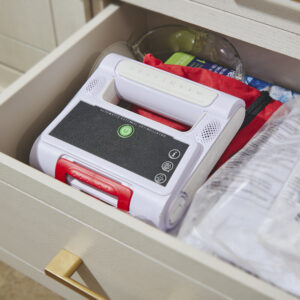
Modern portable AED devices give clear voice instructions to guide users. They’re designed for public use and are increasingly found in homes, workplaces and community spaces¹.
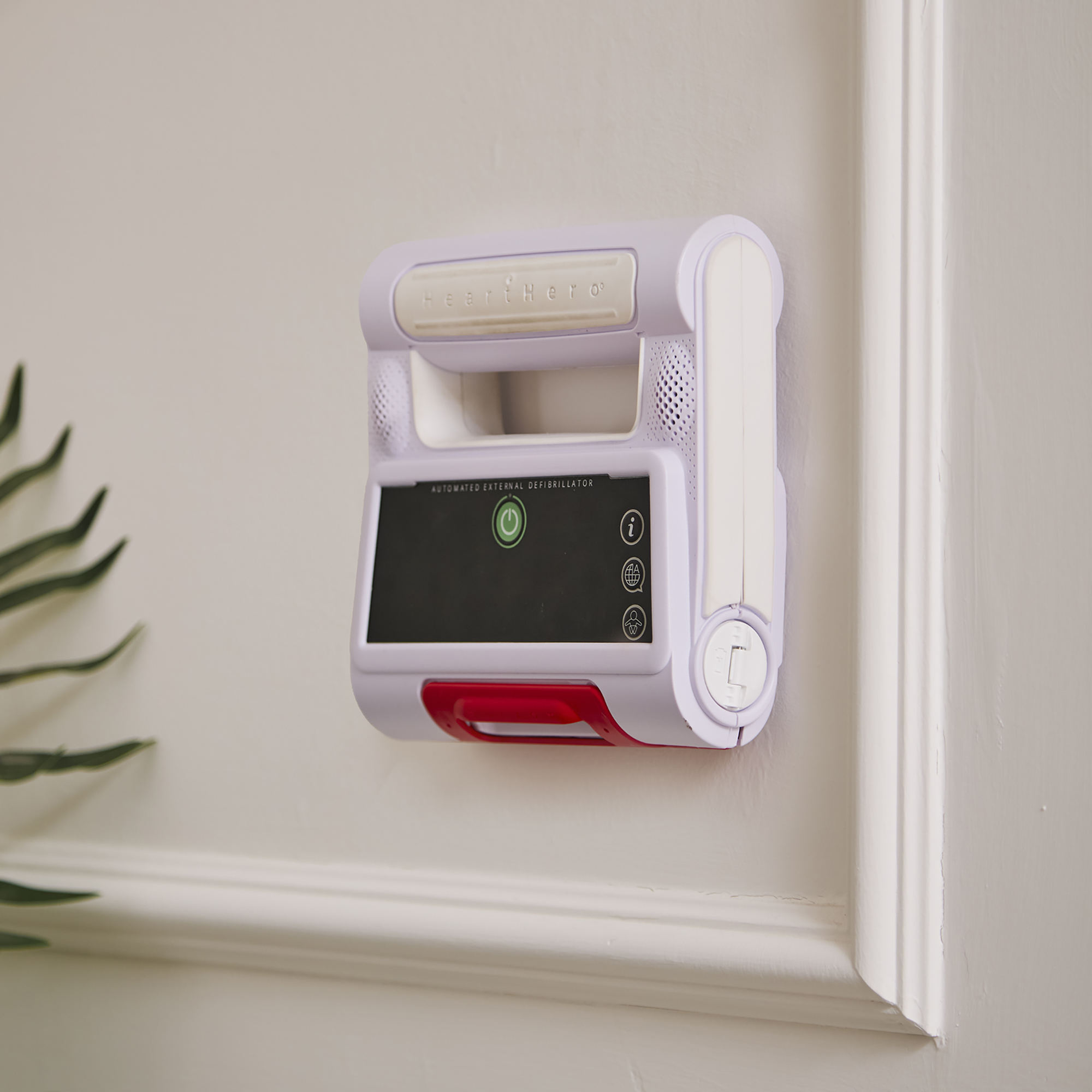
Having protection at home can give you peace of mind and there’s no reason to fear using an AED device.
In this article, we will explain what a portable AED is, how it works and how to use defibrillators in simple steps:
What is an AED defibrillator?
An automated external defibrillator – commonly abbreviated to AED – is a portable device that treats cardiac arrest.
AED defibrillators analyse your heart rhythm and deliver a shock to restore a normal heartbeat². The device is specifically designed for sudden cardiac arrest, not a heart attack.
A heart attack (known as a myocardial infarction in medical terms) is a circulation problem³, while a sudden cardiac arrest is a problem with the heart’s electrical system. When someone has a cardiac arrest, their heart rhythm becomes chaotic and their heart stops pumping⁴.
Portable AED technology is making emergency response to cardiac arrest more accessible. While you might assume using a piece of life-saving equipment, such as a portable AED, is complex, that isn’t the case.
Check out our article which debunks defibrillator myths or read on to learn about how to use defibrillators.
How does an automated external defibrillator work?
An automated external defibrillator analyses heart rhythm automatically and only delivers a shock if it is needed.
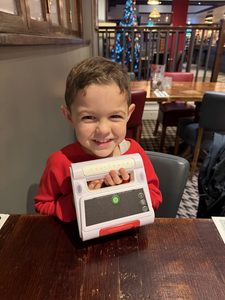
Clear visual prompts and calm voice instructions guide users through each stage of the process. They are designed to be easily operated, not only for adults, but also for children.
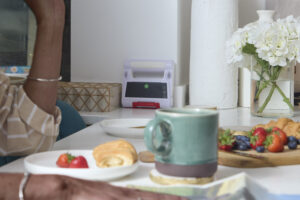
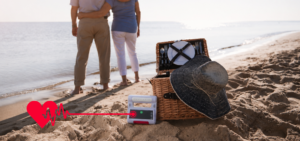
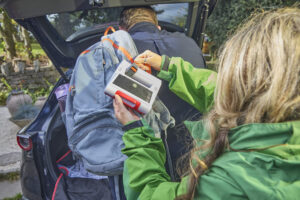
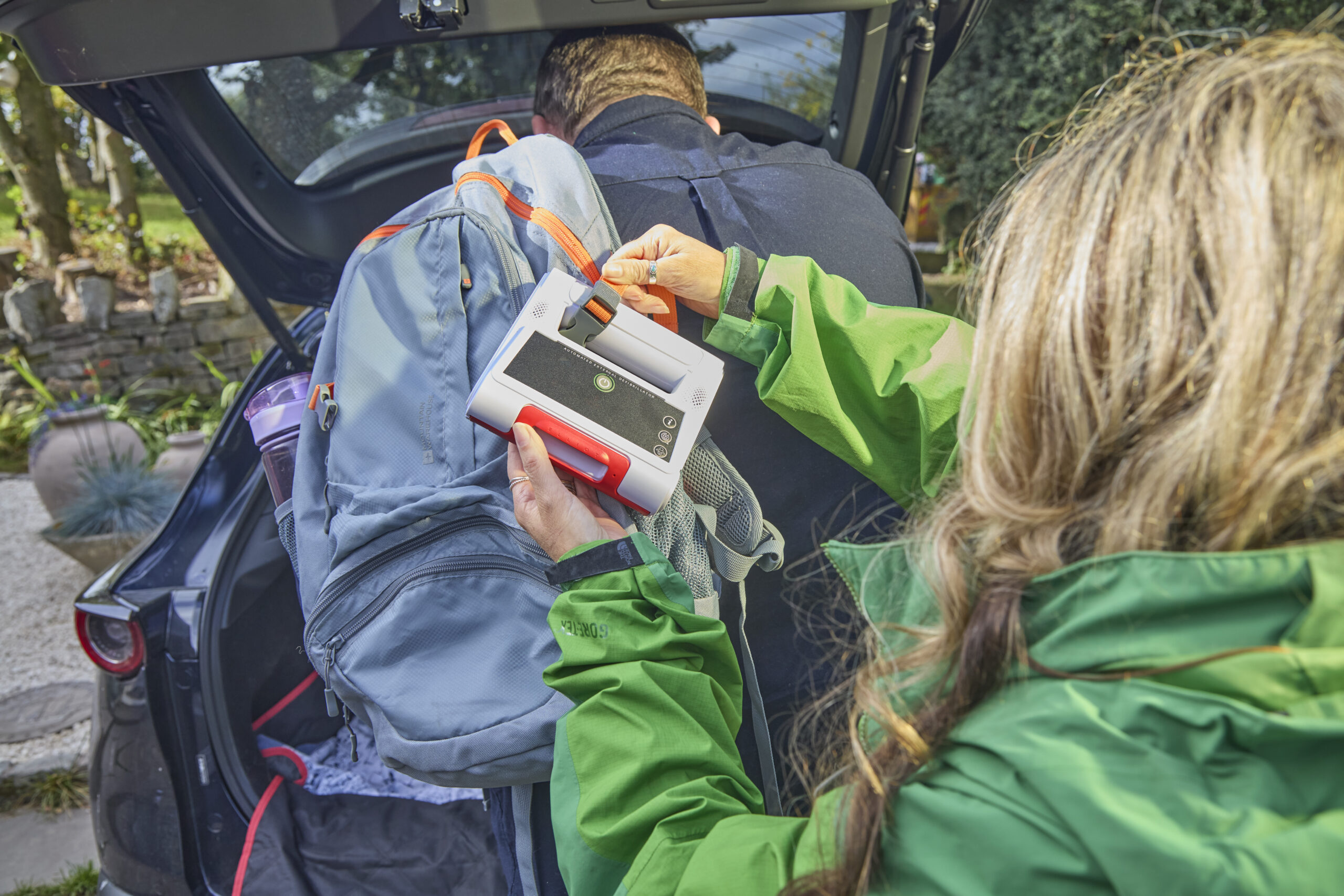
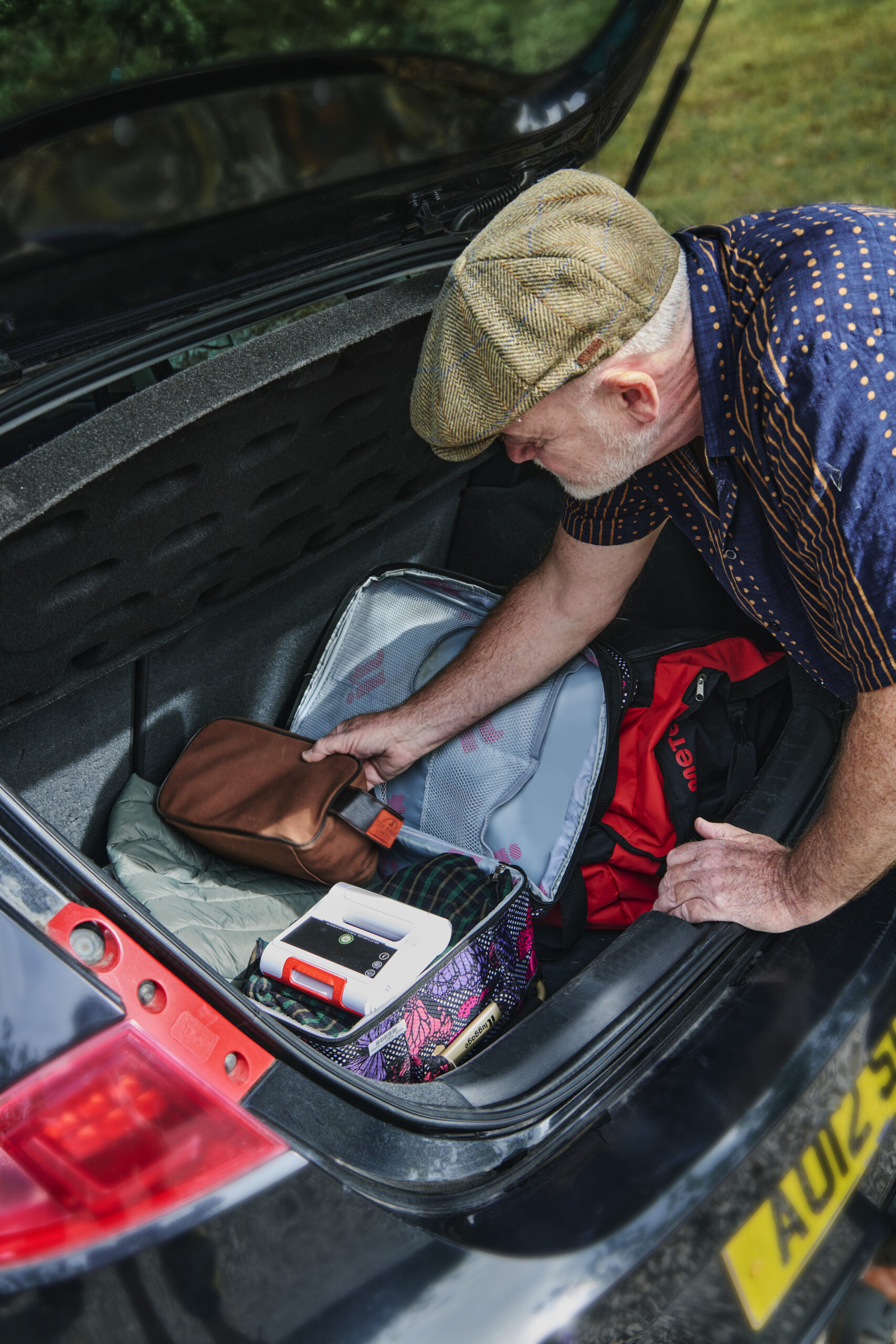
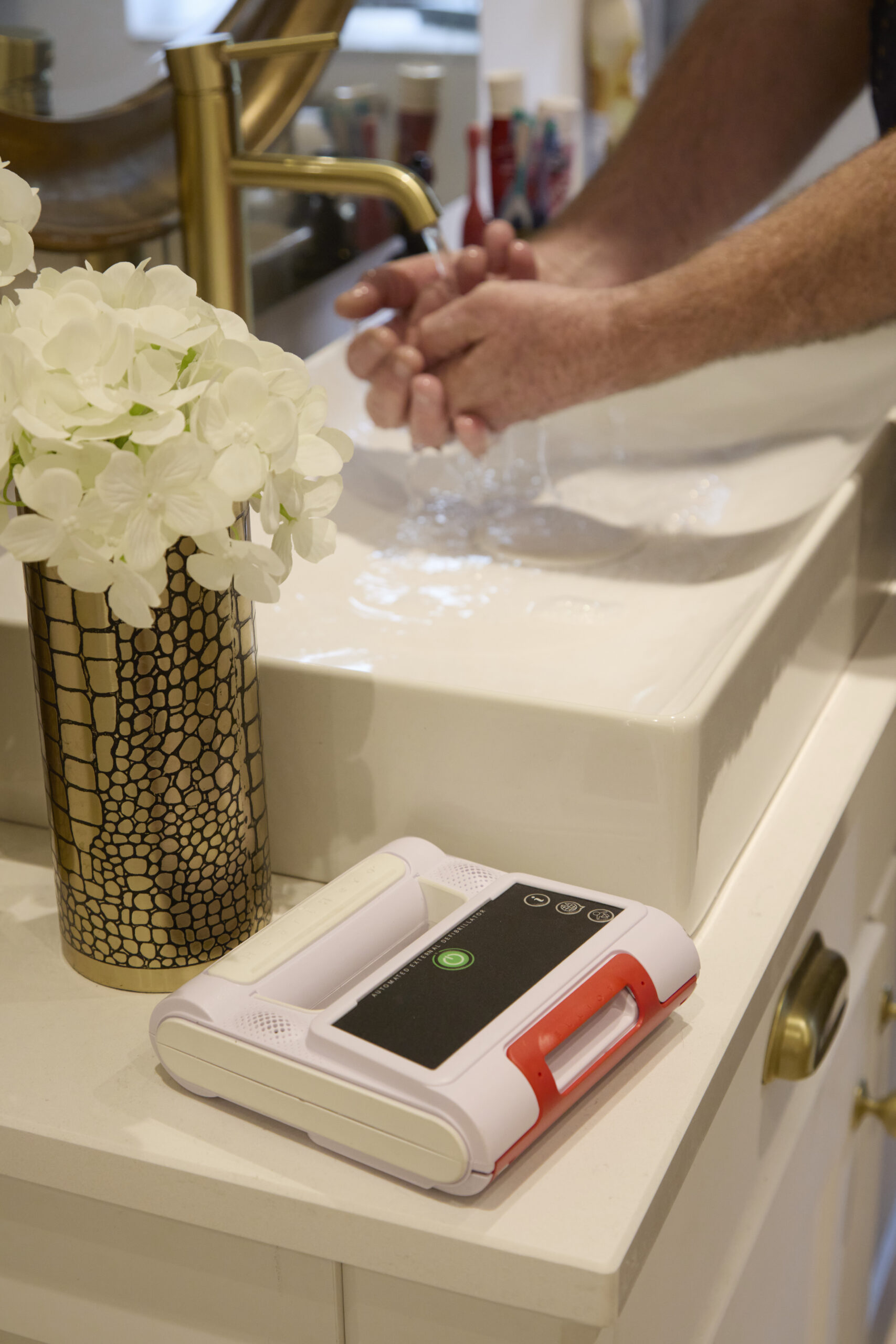
Portable AED defibrillators are safe for public use and can be used at home, taken on holiday or carried during outdoor activities.
Let’s look at how to use the device in a little more detail.
Step-by-Step: How to use an AED defibrillator
Here is how to use a defibrillator step-by-step:
- Turn on the AED device and follow the voice prompts.
- Attach pads to the chest as shown in the placement diagrams (displayed clearly on the electrode pads themselves).
- Ensure no one is touching the person during analysis or shock.
- Continue CPR (cardiopulmonary resuscitation) if instructed by the AED device.
Portable AED devices are designed to guide users through the steps in this process clearly and calmly.
Do you need training to use an AED?
AED defibrillators are intended for public use, and you don’t need training to use one.
The devices are designed for laypersons – no medical training at all is required for operators as controls are user-intuitive.
While some people may wish to take the option of training if they feel they would like to increase their confidence in using an AED, modern portable defibrillators can be operated completely safely without training. You don’t need to worry – an AED will not deliver a shock unless it is absolutely required, after analysing a person’s heart rhythm.
Why portable AEDs are so important
Portable AEDs give people reassurance and the feeling of being in control. But why?
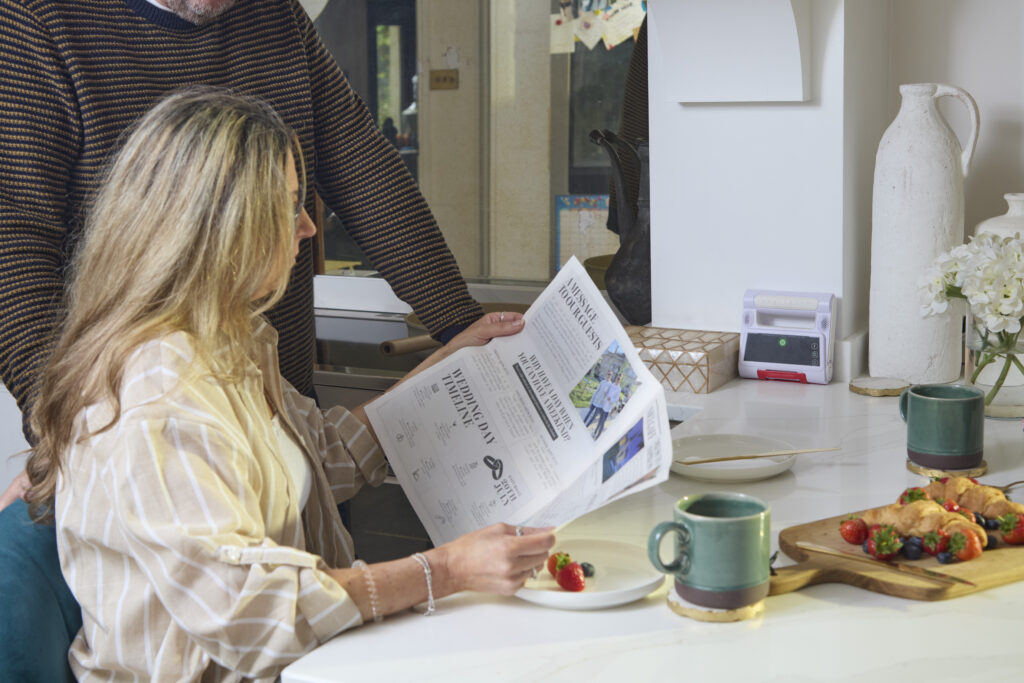
Figures from the Resuscitation Council UK show that 80 per cent of cardiac arrests happen at home⁵. Furthermore, without defibrillation, research found that survival drops by 10 per cent with each minute that passes⁶. These facts are compounded by the vast majority of homes that don’t have an AED.
Having a portable AED at home significantly increases survival chances in sudden cardiac arrest as faster defibrillation improves outcomes, allowing early treatment before paramedics arrive.
It’s not just at home where this rings true – having a portable AED on site increases access to fast defibrillation in workplaces and community spaces, when an emergency arises.
Ultimately, increasing public awareness of how to use defibrillators can help save lives.
The HeartHero AED from MyDefib is user-friendly and designed for everyday people. Reliable, durable and lightweight, it can help you to deliver a critical intervention when it is needed. Read more about this life-saving device
Conclusion
If you are a little concerned about how to use a portable AED when the time comes, that’s only natural.
You should know that portable AED defibrillators are designed to be simple and safe. Clear instructions and user-intuitive design make the process easy to follow for adults and children.
Early defibrillation significantly improves survival outcomes and the basic understanding of how to use an AED defibrillator can help you to act confidently.
As access to portable AED devices grows, the UK is improving its emergency response out of the hospital, in everyday environments.
Hear how HeartHero makes a difference
-
Read more: How to Update Your HeartHero

How to Update Your HeartHero
Easily update your HeartHero AED with Bluetooth technology, keeping your device up to date with the latest firmware.
-
Read more: A tale of two heroes, big and small – Dave and Ezra’s story

A tale of two heroes, big and small – Dave and Ezra’s story
When five-year-old Ezra packs his school bag, his compact HeartHero AED is never left behind. Born with Long QT Type…
-
Read more: JumpStart’s Jon McLeod: The Interview

JumpStart’s Jon McLeod: The Interview
JumpStart is a new campaign calling for defibrillators to be fitted in every new car sold in the UK. We…
-
Read more: How to use an AED defibrillator
How to use an AED defibrillator
When responding to an emergency, many people worry that they might do the wrong thing.
-
Read more: Heatwaves and heart health: Staying prepared during hot weather

Heatwaves and heart health: Staying prepared during hot weather
The UK is changing. Long, hot summers are becoming more common, and periods of extreme heat are no longer unusual.…
-
Read more: Portable AEDs and hospital defibrillators: What’s the difference?
Portable AEDs and hospital defibrillators: What’s the difference?
An AED – or automated external defibrillator, to use its full name – is a portable device that is designed…
-
Read more: World Cup 2026: The healthy heart of football
World Cup 2026: The healthy heart of football
As the excitement from the 2026 FIFA World Cup is at the forefront of everyone’s minds, a recent incident involving…
-
Read more: What is an AED defibrillator?
What is an AED defibrillator?
An AED – or automated external defibrillator, to use its full name – is a portable device that is designed…
-
Read more: How to support heart health during the winter

How to support heart health during the winter
According to the British Heart Foundation, heart attacks are more common during the coldest season¹. During this time of year,…
-
Read more: Defibrillator myths debunked: Time for some fact-finding!

Defibrillator myths debunked: Time for some fact-finding!
Some 80% of cardiac arrests happen at home. This blog article was written to debunk the most common defibrillator myths…